AI Servers and Semiconductor Peripherals: Thermal Performance and Assembly Compatibility Solutions for Precision Electronic Components

1. Industry Trend: Cross-Integration of AI Computing and High-Precision Manufacturing
With the explosive growth of AI computing power and the continuous advancement of semiconductor processes, technical bottlenecks have extended from the design stage to the physical realization in manufacturing. AI servers require extreme space utilization, while electronic components demand perfect compatibility during subsequent assembly. To address the high-tech industry's characteristics of short development cycles and frequent specification changes, we integrate precision laser cutting, precision press brake forming, and diversified surface treatment technologies. Beyond providing manufacturing capacity, we offer a one-stop rapid prototyping mechanism to ensure that every product—from prototype to mass production—achieves exceptional assembly accuracy.
2. Core Product Solutions: Ensuring Assembly Compatibility in Highly Integrated Environments
-
High-Efficiency Heat Dissipation Components: Consistent Thermal Performance and Bending Precision
Technical Focus: Precision bending and highly consistent fin spacing.
Key Challenge Solved: Maximizing heat dissipation surface area within limited space. We ensure precise spacing and vertical alignment of every fin, effectively managing the high heat output of AI chips while maintaining perfect compatibility with heat sink module housings. -
Precision Sensor Housing: Dimensional Stability and Sealing Performance for Complex Forming
Technical Focus: Multi-stage precision deep drawing and uniform material thickness control.
Key Challenge Solved: Providing highly stable and well-sealed protective structures. Through precise dimensional control, the housing integrates tightly with precision components on semiconductor packaging lines, significantly reducing assembly tolerance issues. -
Power Distribution Systems: High-Current Conductivity and Cross-Section Control
Technical Focus: Thick copper processing and cutting surface quality control.
Key Challenge Solved: Providing high-stability copper busbars for server PSU and PDU systems. We strictly control the flatness of cutting surfaces to maximize contact area when connected to circuit breakers or power modules, effectively reducing electrical resistance. -
Server Structural Supports: High-Precision Assembly and Multi-Hole Alignment Control
Technical Focus: Large-area multi-hole precision stamping and tolerance stack-up control.
Key Challenge Solved: Ensuring smooth integration of blade server brackets and drive trays during mass production assembly. Through mold optimization, we resolve deformation issues after sheet punching and maintain dimensional accuracy when integrating multiple components. -
Precision Grounding Spring Contacts: Accurate Springback Control and Reliable Conductivity
Technical Focus: High-elasticity alloy processing, fatigue resistance, and stable pressure control.
Key Challenge Solved: Ensuring stable grounding in high-speed data transmission environments. We precisely control bending springback to maintain the designed contact pressure after assembly into the chassis, guaranteeing reliable signal transmission.
3. Expert Technical FAQ: Addressing Core Concerns of R&D and Procurement
Q1: How can you ensure that parts produced in large volumes remain consistently assemble-able across batches?
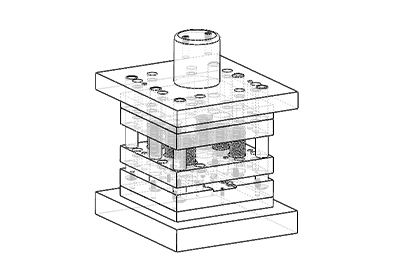
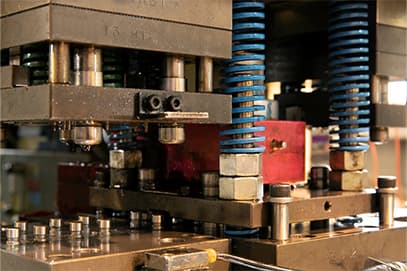
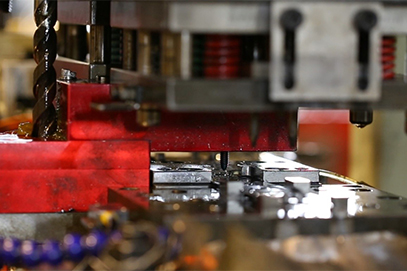
This relates to what we emphasize as assembly compatibility. By utilizing stamping machines with multiple tonnage capacities (15T–160T) and implementing compensation mechanisms during mold design, we ensure stable dimensional consistency even in mass production runs of tens of thousands of parts, effectively preventing tolerance accumulation issues during customer assembly.
Q2: Traditional stamped parts often have surface oil residue. How can they meet electronic-grade cleanliness standards?
We use volatile electronic-grade stamping oil, ensuring no grease residue remains when parts leave the factory. Components can be directly integrated into automated assembly lines without contaminating precision sensors or affecting subsequent bonding yield.
Q3: During early R&D stages, designs often change frequently. How does the manufacturing side provide flexible support?
We provide a one-stop rapid prototyping service combining laser cutting, precision press brake forming, and surface treatment. Without the need for mold development, prototype parts can be produced within days for R&D assembly testing, helping customers quickly refine designs and shorten product time-to-market.
Q4: Why is one-stop integration (laser cutting, stamping, and surface treatment) critical for procurement?
Integrated processes significantly reduce logistics losses and communication costs caused by outsourcing to multiple factories. By completing machining and surface treatment within the same quality system, we ensure that parts are ready for immediate assembly upon delivery—making it the optimal choice for an efficient supply chain.
4. Conclusion: Your Technical Blueprint, Our One-Stop Manufacturing Capability
From rapid laser-cut prototyping to highly compatible mass production, we understand that in the AI era, both speed and assembly precision are critical. With our fully integrated manufacturing capabilities, we are your most reliable partner for stable supply of high-tech components.